
OpenSearch: A Comprehensive Overview
OpenSearch is an open-source search and analytics suite that enables organizations to access, visualize, and analyze large volumes of data in real time. Initially derived from the Elasticsearch and Kibana projects, OpenSearch arose as an alternative following changes in licensing for parts of the original software. Since its inception in 2021, OpenSearch has garnered attention for its robust functionality, flexibility, and the collaborative nature of its development. This essay explores the architecture, features, use cases, and community engagement surrounding OpenSearch, demonstrating its significance in the realm of data processing and analytics.
Architecture of OpenSearch
At its core, OpenSearch is built on a distributed architecture designed to handle extensive data sets efficiently. The primary components of OpenSearch include:
- OpenSearch Engine: This is the heart of the suite, comprising a distributed search engine that indexes and queries data. The architecture allows for horizontal scalability, meaning users can add new nodes to enhance performance and handle increased data loads effectively.
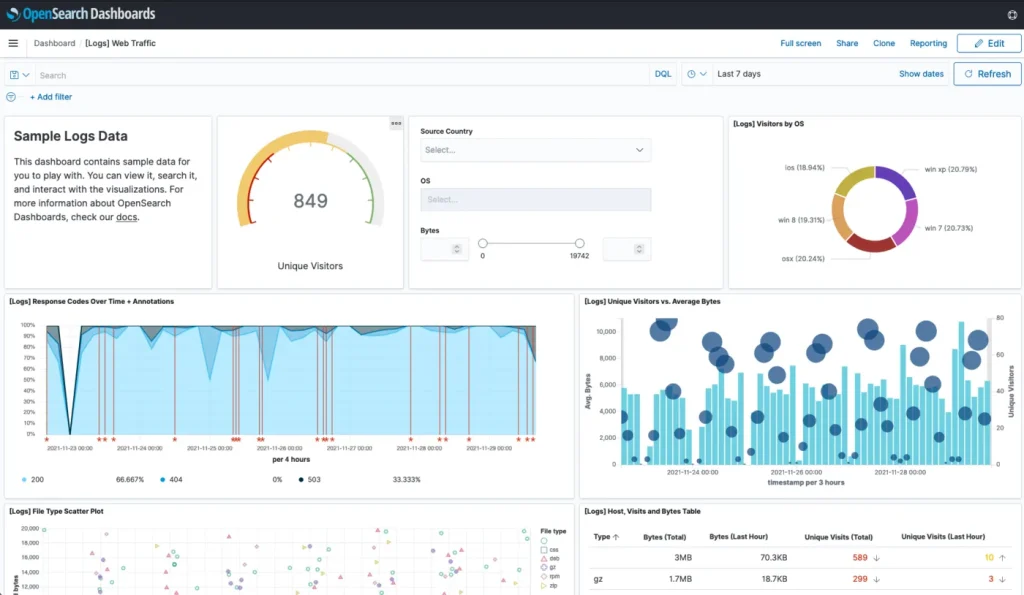
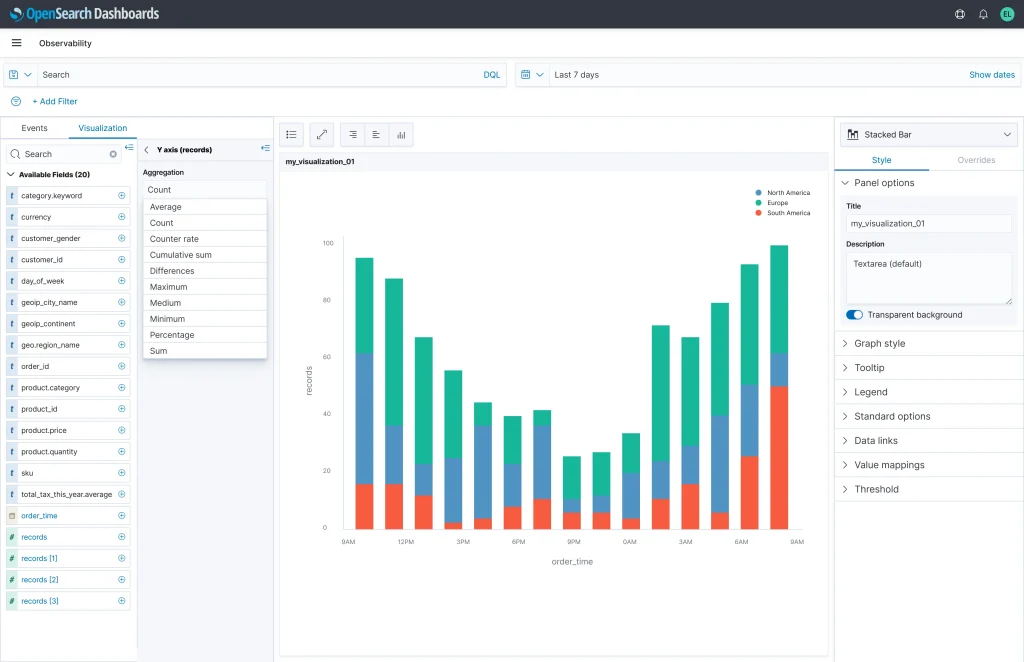
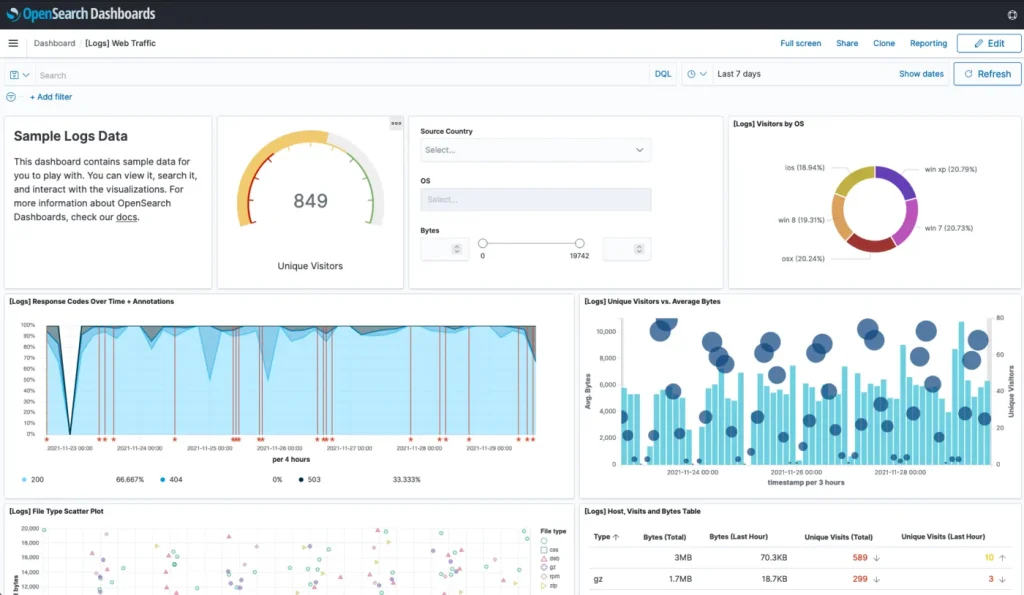
- OpenSearch Dashboards: A visualization tool akin to Kibana, OpenSearch Dashboards provides users with an intuitive interface for querying data, creating visualizations, and building dashboards to display analytics. This component facilitates the exploration of data patterns and trends, enhancing insights derived from the data.
- Plugins: OpenSearch supports a wide array of plugins that extend its functionality. These can range from security features to machine learning capabilities, thereby empowering users to customize the application to meet specific business needs.
The architecture ensures that even with large-scale deployments, the system remains responsive. Features like sharding and replication further bolster its reliability, allowing data to be distributed across multiple nodes and ensuring redundancy.
Key Features of OpenSearch
OpenSearch is known for incorporating a myriad of features that enhance its capabilities:
- Full Text Search: Like its predecessor, OpenSearch provides advanced full-text search functionality, allowing users to perform complex queries across vast amounts of text data. It supports features like fuzzy search, synonyms, and relevance scoring.
- Real-time Analytics: OpenSearch is designed to handle real-time data ingestion and analysis, making it useful in scenarios where immediate insights are necessary, such as monitoring application logs or security events.
- Data Visualization: OpenSearch Dashboards serve as a powerful tool for visualizing data trends. The interface allows users to create graphs, charts, and other forms of visual representation, making it easier to interpret complex datasets.
- Security Features: OpenSearch comes with an integrated security model that includes role-based access control, data encryption, and audit logging. These features protect sensitive data and ensure compliance with various regulatory standards.
- Alerting: The built-in alerting functionality enables users to set conditions on data and receive notifications when specific thresholds are met. This is vital for proactive incident response in scenarios such as infrastructure monitoring.
- Machine Learning: With its machine learning capabilities, OpenSearch can perform anomaly detection and forecasting, enabling users to gain deeper insights from their data without requiring extensive data science expertise.
Use Cases of OpenSearch
OpenSearch can be applied to a variety of scenarios across multiple industries. Some prominent use cases include:
- Log and Event Data Analysis: Organizations often employ OpenSearch to monitor and analyze logs from servers, applications, or security events. This is valuable for troubleshooting issues, detecting anomalies, and ensuring system uptime.
- E-commerce Search Functionality: Retailers utilize OpenSearch to power their search functionalities, providing customers with relevant search results and recommendations by leveraging its full-text search features.
- Business Intelligence: Companies use OpenSearch to analyze their operational data, generating insights that inform decision-making processes. Visualizations in OpenSearch Dashboards help in identifying trends and understanding key performance indicators (KPIs).
- Security Information and Event Management (SIEM): Security teams implement OpenSearch to aggregate and analyze data from various sources, facilitating the identification and response to potential security threats.
- Website Search: Many websites integrate OpenSearch to provide users with a robust search experience, leveraging its capabilities to deliver relevant content quickly and efficiently.
Community and Ecosystem
One of the defining features of OpenSearch is its commitment to open-source collaboration. The project is an initiative led by Amazon Web Services (AWS), but it emphasizes contributions from the broader community. This collaborative approach contrasts with proprietary technologies, as it invites developers from around the globe to contribute to its evolution.
The OpenSearch community provides:
- Public Roadmap: The inclusion of a public roadmap allows community members to see what features are being prioritized and to contribute ideas, ensuring that development aligns with user needs.
- Documentation and Learning Resources: The project maintains comprehensive documentation, tutorials, and training materials that facilitate onboarding for developers and users, fostering a knowledgeable community.
- Community Forums and Support: OpenSearch hosts forums where users can ask questions, report issues, and share solutions, creating a collaborative environment for troubleshooting and knowledge-sharing.
- Regular Releases: The initiative follows a regular release schedule, ensuring that the software evolves with new features, enhancements, and security updates based on community feedback.
Browsers that Support OpenSearch: An Overview of Features and Implications
In a rapidly evolving digital landscape, the need for efficient and user-centric search functionalities has led to the emergence of various technologies aimed at enhancing the search experience. One such technology is OpenSearch, a standard for the creation of a search engine that enables users to identify, query, and utilize a website’s search functionality through their web browser. It provides a seamless experience by allowing users to perform searches directly from the browser’s address bar or search box without having to navigate to the website first. This essay explores the compatibility of OpenSearch with various modern web browsers, the significance of OpenSearch, its advantages, and the implications for both users and developers.

Understanding OpenSearch
OpenSearch is an open-source specification defined in a format that web developers can implement to provide search integration for their sites. The specification is designed to be easily consumable by web browsers, allowing them to discover search engines tailored for a specific website. By using OpenSearch, web developers can create XML files that describe the search capabilities they provide, including various search parameters and options that enhance user experience.
Why OpenSearch Matters
The significance of OpenSearch lies in streamlining the way users interact with search functionalities on the web. As browser usage continues to expand globally, providing direct access to a site’s search engine is essential for user retention and engagement. It minimizes the steps required to access a desired search, thereby improving usability and efficiency. With websites increasingly needing to cater to diverse user bases, OpenSearch facilitates easier integration of localized or specialized searches, ensuring that users are met with relevant content without unnecessary friction.
Browsers Supporting OpenSearch
Most modern browsers have adopted OpenSearch support due to its advantages in user experience and convenience. Here is an overview of popular web browsers that integrate OpenSearch functionality:




- Mozilla Firefox
Firefox has been one of the earliest adopters of OpenSearch. Its inherent support for this technology allows users to discover search engines from a plethora of sites. Users can add OpenSearch engines simply by visiting a site that supports the standard, and a prompt will typically appear in the address bar or search bar. Mozilla continues to enhance its search capabilities, ensuring that developers can easily implement and improve upon the OpenSearch standards
- Google Chrome
Google Chrome also supports OpenSearch, making it intuitive for users looking to customize their browsing experience. Developers can create OpenSearch plugins that users can add directly to their Chrome browsers. The browser collects metadata from these plugins to allow users to access searches with simple keywords or phrases in the address bar, significantly speeding up the search process. Google’s continuous emphasis on search efficiency aligns well with the OpenSearch standard, fostering greater user engagement.
- Microsoft Edge
Microsoft Edge, the successor to Internet Explorer, has integrated support for OpenSearch as well. Users can easily add search engines from sites that utilize OpenSearch. The Edge browser further enhances this feature by offering various search suggestions based on users’ query patterns. The integration ensures that users can efficiently access site-specific searches quickly, improving the overall user experience.
- Safari
Apple’s Safari browser also implements OpenSearch functionality, although the support may not be as robust as it is in Firefox or Chrome. Users can still benefit from the ability to add search engines to their workflows, but site developers are often encouraged to implement their OpenSearch descriptions effectively to ensure Safari users can take full advantage of this functionality.
The Advantages of OpenSearch for Users and Developers
OpenSearch offers a range of benefits for both users and developers.
For users, the primary advantage is convenience. OpenSearch allows for a more fluid searching process by minimizing the need to independently visit a site to perform a search. Users can save valuable time and reduce frustration when searching for specific content or information.
For developers, adopting OpenSearch can enhance website accessibility and usability, improving the overall user experience. Websites that implement OpenSearch not only cater to user preferences but also position themselves as forward-thinking and innovative, potentially attracting more visitors. Well-structured OpenSearch descriptions can significantly boost a website’s visibility in search engines, providing developers with additional incentives to embrace this technology.
Conclusion
OpenSearch represents a significant advancement in the field of search and analytics, providing a flexible, robust, and open-source alternative to existing technologies. Its architecture is designed to handle large workloads effectively while allowing customization through plugins and community contributions. By facilitating real-time data access and enabling complex analytics, OpenSearch serves a wide range of applications across various industries. As organizations continue to generate and rely on vast amounts of data, OpenSearch stands out as a critical tool that empowers users to derive meaningful insights and make data-driven decisions. The continued development and engagement of its community will play a pivotal role in shaping its future, ensuring it remains relevant in a fast-evolving digital landscape.